


Wave Rider Buoys are buoy devices that acquire sea surface wave information by moving with the waves. They are mainly used to record the changing processes and basic characteristics of waves. Because the buoy moves synchronously with the waves during observation, the acquired data can reflect the wave state under actual sea conditions, making it widely used in marine monitoring and research.
During operation, the Wave Rider Buoy undergoes continuous vertical and horizontal movement with the rise and fall of the waves. The buoy's internal sensing system records these movements and processes the data to obtain commonly used wave parameters such as wave height, period, and wave direction. This wave-following recording method helps reduce the influence of fixed structures on wave morphology, making the observation results closer to natural conditions.
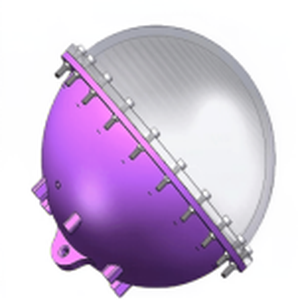
Wave Rider Buoys typically employ a relatively simple float design to ensure good responsiveness to wave changes. The float's size, mass distribution, and center of gravity position all affect its wave-following performance; a reasonable design helps the buoy maintain stable operation under different wave conditions. This structural feature makes it suitable for various marine environments.
Wave Rider Buoys prioritize continuity and stability in data acquisition. Through long-term deployment, the buoys can obtain complete time-series data, providing a foundation for analyzing wave variations across different time scales. Whether it's short-term weather changes or seasonal wave characteristics, these data can be used for comparison and research.
Data processing is also a crucial aspect of Wave Rider Buoy applications. By analyzing raw motion data, wave components within different frequency ranges can be identified, revealing the distribution of wind waves and swells. This type of analysis is practically significant for studying wave formation mechanisms and propagation processes, and provides a reference for subsequent applications.
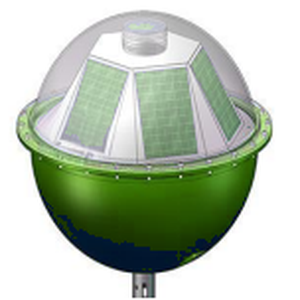
Wave Rider Buoys typically employ low-power designs combined with solar power to meet the requirements of long-term unattended operation. Depending on the deployment area conditions, the buoy can select an appropriate data transmission method to ensure continuous acquisition and management of observational data.
In practical applications, Wave Rider Buoys are often deployed in nearshore or relatively open waters for wave condition monitoring and basic data acquisition. This data can be used for scientific research analysis, environmental assessments, and preliminary engineering investigations. By organizing and analyzing long-term data, users can gain a clearer understanding of the wave variation characteristics of the target sea area.
Overall, the Wave Rider Buoy provides a stable data acquisition method for sea surface wave monitoring through wave-following observation. Its continuous operation and data accumulation capabilities enable it to play a fundamental role in various wave observation tasks.