


The ocean never stays still. Waves are constantly forming, interacting, and reshaping the surface. For scientists and engineers, understanding these movements is not just interesting-it's essential.
This is where wave sensors come in.
What Does a Wave Sensor Actually Measure?
Modern wave sensors are no longer simple motion recorders. With the integration of MEMS-based inertial systems, a compact device can now capture:
Wave height (including maximum and statistical values)
Wave period and frequency
Wave direction
Energy spectrum and directional spectrum
Instead of looking at a single parameter, users now get a full picture of how waves behave over time.
From Motion to Data: How It Works
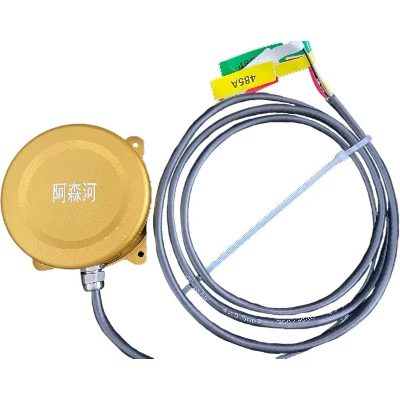
A wave sensor mounted inside a buoy tracks motion in multiple axes. Using a nine-axis MEMS-IMU, it measures acceleration, angular velocity, and orientation.
But raw motion data alone is not enough.
Advanced onboard algorithms process this data in real time, converting movement into wave parameters. By reducing integration drift and improving low-frequency stability, the system can capture both wind waves and long-period swells.
Why Stability Matters
One of the biggest challenges in wave measurement is low-frequency noise. Traditional systems often struggle below 0.05 Hz, which directly affects swell observation.
With improved algorithms, modern wave sensors maintain stable outputs even in this range. This allows for:
Clear separation of wind waves and swells
More reliable energy spectrum analysis
Better long-term monitoring results
Real Applications in the Field
Wave sensors are widely used in:
Offshore engineering
Marine environmental monitoring
Wave energy projects
Navigation safety systems
In many cases, they are deployed as part of drifting buoys, providing continuous data without complex infrastructure.
Final Thoughts
Wave sensors are becoming smaller, smarter, and more reliable. As ocean observation moves toward real-time and data-driven systems, these sensors are playing a central role.