


In today's marine and environmental projects, data collection has become more important than ever. Whether it's for offshore engineering, environmental protection, or scientific research, having access to continuous and reliable ocean data can make a real difference. This is where an ocean monitoring buoy comes into play.
An ocean monitoring buoy is a floating device designed to stay on the surface of the water while collecting and transmitting environmental data over long periods of time. Unlike traditional manual sampling methods, which require frequent on-site operations, monitoring buoys allow users to gather real-time data remotely, reducing both labor and operational limitations.
At its core, a monitoring buoy consists of three main parts: the buoy body, the sensor system, and the data transmission unit. The buoy body provides buoyancy and stability, ensuring that the system can operate even in changing sea conditions. Depending on the design, it can be adapted for calm inland waters or more demanding offshore environments.
The sensor system is the most important component. Different types of sensors can be integrated depending on the monitoring purpose. For example, water quality monitoring buoys may include sensors for temperature, pH, dissolved oxygen, turbidity, and conductivity. In more advanced setups, additional sensors can be added to monitor nutrients or even detect specific pollutants.
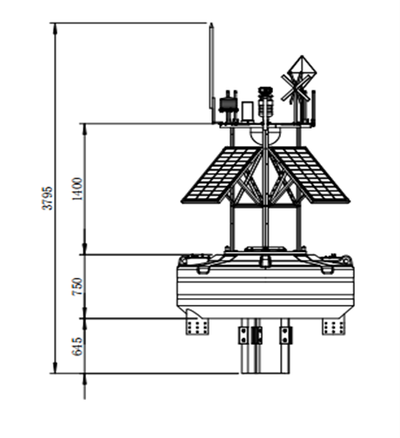
For wave-related applications, a wave buoy can be equipped with a built-in wave sensor. These sensors are often based on inertial measurement technology, which allows the buoy to detect motion and calculate wave parameters such as wave height, wave period, and wave direction. This kind of data is especially useful for offshore construction, port management, and marine forecasting.
Another key part of the system is the power supply. Since monitoring buoys are usually deployed in remote locations, they need to operate independently for long periods. Solar panels are commonly used to provide a steady source of energy, often combined with rechargeable batteries to ensure continuous operation during low-light conditions.
Data transmission is what makes monitoring buoys truly efficient. Depending on the location, data can be sent via 4G networks, radio communication, or satellite systems. This allows users to access real-time data from anywhere, making it easier to monitor conditions, identify changes, and respond quickly when needed.
Compared with traditional monitoring methods, ocean monitoring buoys offer several practical advantages. They reduce the need for manual sampling, lower operational costs over time, and provide continuous data instead of isolated measurements. This continuous flow of information is particularly valuable for identifying trends and understanding long-term environmental changes.
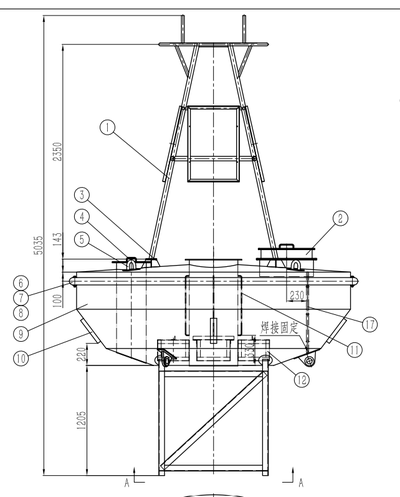
In addition, monitoring buoys can be customized for different applications. For example, a buoy used in aquaculture may focus more on water quality parameters, while one deployed near an offshore wind farm may prioritize wave and weather data. This flexibility allows users to build a system that matches their specific project requirements.
Another aspect worth noting is durability. Marine environments can be harsh, with strong waves, corrosion, and biofouling affecting equipment over time. A well-designed buoy system takes these factors into account, using suitable materials and structural designs to maintain stable performance throughout its deployment period.
As marine industries continue to evolve, the demand for reliable data is only increasing. Ocean monitoring buoys are becoming an essential tool for a wide range of applications, from environmental observation to industrial operations.
In simple terms, an ocean monitoring buoy is more than just a floating device. It is a data platform that connects the ocean to decision-makers, helping them better understand and respond to changing marine conditions.