


On the vast ocean, energy supply has always been the biggest challenge facing buoy systems. Traditional buoys require regular battery replacement or rely on external power supplies, making maintenance difficult and costly. However, the Wave Rider Buoy's "self-powered" technology changes this landscape: it can operate stably at sea for months or even years without an external power source. How does it achieve this?
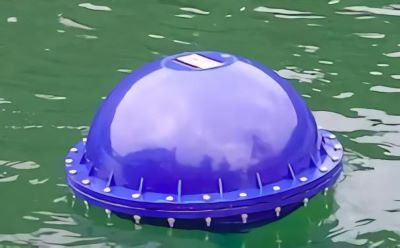
The secret to the Wave Rider Buoy's self-sufficiency lies first and foremost in its efficient solar system. Multiple high-conversion solar panels are deployed on the top and surface of the buoy, receiving sunlight from multiple angles and generating electricity efficiently in both sunny and diffuse light conditions.
Combined with a large-capacity lithium battery energy storage system, the buoy's core systems can maintain stable operation even in conditions of continuous rain or polar night. This means that the Wave Rider Buoy requires virtually no maintenance and can continuously provide high-quality wave and environmental data while drifting on the ocean for extended periods.
In addition to efficient power generation, energy-saving strategies are crucial. The Wave Rider Buoy utilizes our independently developed low-power control system, which intelligently manages energy distribution. For example, at night or during non-sampling periods, sensors enter sleep mode, leaving only satellite communication and clock synchronization modules active. During critical monitoring periods, all sensors automatically wake up to perform high-frequency sampling.
This intelligent energy management mechanism reduces the buoy's average power consumption by over 30%, ensuring long-term stable operation even in extreme environments.
Compared to conventional buoys, another innovative feature of the Wave Rider Buoy is its wave energy harvesting technology. A micro-wave energy converter within the buoy converts the mechanical energy generated by the buoy's wave movement into electrical energy to supplement the power supply system.
When solar energy is insufficient, wave energy serves as a backup power source, allowing the buoy to be self-sufficient even in rainy weather or at high latitudes. This design not only improves system endurance but also demonstrates our innovative strength in clean energy applications and marine engineering design.
The Wave Rider Buoy's hull is constructed from a combination of high-molecular-weight polyethylene and stainless steel, resulting in a lightweight yet extremely strong structure that is corrosion-resistant, impact-resistant, and UV-resistant. The modular design not only facilitates maintenance but also effectively protects the power system and internal circuitry from seawater corrosion.
This structure ensures the buoy maintains stable operation even in winds and waves as strong as force 8 or prolonged salt spray conditions. Its average service life is expected to exceed 10 years, significantly reducing maintenance and replacement costs.The Wave Rider Buoy is not only self-powered but also self-transmitting. Built-in satellite (Iridium/Beidou) and 4G communication modules automatically upload real-time monitoring data to a backend platform, allowing users to remotely view key parameters such as wave height, period, direction, and water temperature.
The system also supports energy status monitoring and remote management. When the energy storage capacity decreases, the backend automatically issues an alert, ensuring safe, unattended operation.