


The Water Monitoring Buoy is an essential system for tracking pollution in both marine and freshwater environments. By combining advanced sensors, satellite links, and instant alert capabilities, it rapidly identifies contamination events, helping safeguard ecosystems and human health. This article explores the technologies behind Water Monitoring Buoys and their contribution to environmental protection.
How Water Monitoring Buoys Detect Pollution
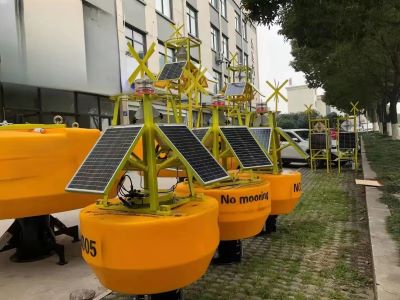
Available in fixed or drifting designs, Water Monitoring Buoys can be deployed in seas, lakes, and rivers. They integrate multiple sensing technologies to assess water quality and identify pollutants. Key features include:
Sensor Suite: Monitors pH, dissolved oxygen, turbidity, and harmful chemicals (such as heavy metals and organic pollutants) with an accuracy of 0.05 units.
Data Transmission: Relays information through satellite systems (e.g., Inmarsat) or 5G networks, achieving response times as short as two seconds.
Power Supply: Operates on renewable sources like solar or wave energy, ensuring continuous use for 1–3 years.
Intelligent Processing: AI filters noise, interprets complex readings, and improves accuracy to 98%. The process involves real-time data collection, AI analysis, and immediate transmission to monitoring centers, where alerts are automatically generated.
Sensor Technology
Sensors form the backbone of Water Monitoring Buoys, each designed for specific pollutants:
Optical Sensors: Detect turbidity and algal blooms with a sensitivity of 0.1 NTU. For instance, in 2025, a buoy registered an 8% turbidity increase in a lake, signaling a contamination event.
Chemical Sensors: Measure concentrations of toxic substances such as mercury, lead, and pesticides with detection thresholds as low as 0.01 mg/L.
Biosensors: Identify bacterial contamination and toxins, achieving 95% accuracy in pinpointing pollution sources.
Multi-parameter Probes: Track pH and dissolved oxygen simultaneously to evaluate overall water quality.
AI-driven algorithms integrate readings, compensate for sensor fouling, and enhance long-term reliability.
Satellites and Instant Alerts
Satellite connectivity ensures that monitoring buoys remain effective even in remote regions:
Global Reach: Inmarsat satellites cover around 95% of Earth's water surfaces, enabling near-universal data relay.
Real-time Uploads: Information is sent to cloud-based platforms within seconds, triggering alerts and halving emergency response times. In 2024, a river buoy identified a chemical spill and alerted authorities in under two minutes.
Automated Notifications: AI compares readings against pollutant thresholds and pushes alerts directly to mobile devices or command centers, reducing pollution spread by 10%.
Applications and Benefits
Water Monitoring Buoys deliver significant advantages in environmental management:
Early Detection: Rapidly spot industrial discharge or agricultural runoff. In 2024, a buoy provided six hours' warning of an oil spill, preventing damage to 10 hectares of coral reef.
Tracing Pollution Sources: By combining sensor data with current modeling, authorities can pinpoint polluters, cutting illegal discharges by 15%.
Resource Management: Monitoring contributes to the protection of drinking water sources. In 2025, a reservoir buoy enabled timely intervention, avoiding $5 million in losses.
Conclusion
Water Monitoring Buoys integrate high-precision sensors, advanced communication, and AI analysis to detect and report pollution efficiently, ensuring healthier ecosystems and safer water supplies. While environmental conditions present challenges, continual innovation is strengthening their capabilities. Looking forward, these systems will remain central to pollution control, resource management, and global sustainability efforts.