


In industrial liquid transfer systems, equipment selection directly impacts operational stability and subsequent maintenance costs. Due to their diverse types and wide applicability to various operating conditions, the selection of positive displacement pumps requires analysis tailored to specific system requirements. A reasonable selection does not pursue extreme parameters but emphasizes the degree of matching between the pump and the process flow; this is a crucial prerequisite for the long-term stable operation of positive displacement pumps.
During the selection process, the characteristics of the medium must be considered first. Positive displacement pumps transport liquids through mechanical displacement, thus exhibiting strong adaptability to changes in medium viscosity. For low-viscosity liquids, such as water-based solutions or some chemical agents, diaphragm or plunger pump structures are more likely to achieve stable output; while for handling higher-viscosity liquids, gear pumps or screw pumps are often more suitable for continuous transport. If the medium is corrosive or contains impurities, targeted selection of materials and structural forms is necessary to reduce wear and corrosion during operation.
Positive displacement pumps offer stable delivery over a wide pressure range, but different designs vary in pressure resistance and operating methods. For example, plunger-type positive displacement pumps are better suited for metered delivery at higher pressures, while diaphragm pumps are more commonly used in low- to medium-pressure systems. When designing a system, it's crucial to assess the pump's operating pressure based on pipeline length, number of valves, and the resistance of downstream equipment to avoid pressure mismatches affecting overall operation.
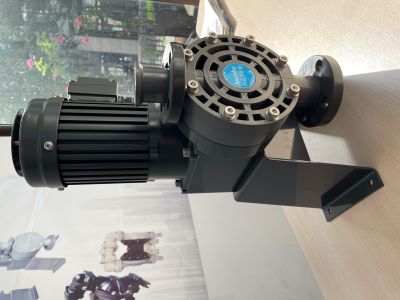
Positive displacement pumps exhibit good stability at low flow rates, making them advantageous in scenarios requiring continuous small-dose dosing. For instance, in water treatment, chemical additives, or experimental production lines, pump output needs fine-tuning to adapt to process changes. By selecting appropriate specifications and adjusting the method, the pump can maintain a relatively stable operating state across different flow ranges, better integrating into the system's operational rhythm.
From a system matching perspective, positive displacement pumps often need to work in conjunction with pipelines, valves, and control units. Due to the direct output characteristics of positive displacement pumps, safety valves or buffer devices are typically included in the system to handle pressure changes under abnormal conditions. This isn't a problem with the equipment itself, but rather a standard consideration in system design regarding operational safety and stability. A well-configured system allows the pump to maintain a more stable operation during daily use.
In practical applications, different industries have different priorities when selecting Positive Displacement Pumps. For example, in the chemical industry, media compatibility and long-term performance are more important during selection; in municipal water treatment, system stability and ease of maintenance are often more crucial; in emerging industries such as new energy and batteries, pumps need to adapt to multiple process switching and the alternation of different liquid types. These differences necessitate a thorough evaluation of operating conditions during the selection phase, rather than simply making a decision based on parameter comparisons.
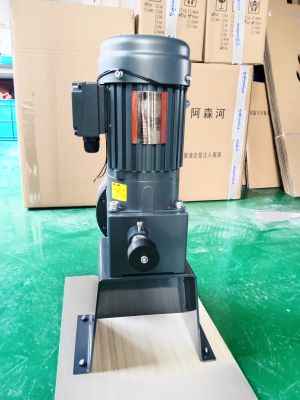
Of course, the operating environment also affects selection. Ambient temperature, installation space, and operating frequency all influence the pump's performance. Positive Displacement Pumps are typically compact, but maintenance space must still be reserved during actual installation for routine inspections and component replacement. A proper installation method helps extend the equipment's lifespan and reduces uncertainties during operation.
Therefore, selecting positive displacement pumps is not a simple comparison of a single parameter, but a comprehensive assessment of the media characteristics, system pressure, flow requirements, and operating environment. By appropriately matching the pump type with system conditions, the stable delivery characteristics of positive displacement pumps can be fully utilized, enabling them to continuously play a role in industrial processes. This system-matching-centric selection approach is also a crucial foundation for ensuring the long-term stable operation of the equipmen