


In many natural water bodies, water does not move in the same manner as a whole; differences in velocity and direction often exist between different depth layers. This phenomenon is common in estuaries, nearshore seas, and lakes. ADCP Buoy provides a stable data acquisition method for observing stratified water flow through profile velocity measurement.
We will first introduce the observation principle. ADCP Buoy relies on acoustic Doppler technology to detect the movement of suspended particles in the water, thereby retrieving velocity information at different depth layers. Compared with single-point velocity measurement, profile observation can simultaneously reflect the flow of multiple water layers, which is more conducive to analyzing the internal structure of the water body. This observation method has significant advantages in studying stratified flow characteristics.
Stratified water flow is often related to tides, wind fields, water temperature, or density changes. By deploying ADCP Buoys over a long period, velocity and direction data of different water layers can be continuously acquired and recorded in time series form. By analyzing this data, the stratification changes of the water body over different time periods can be identified, providing basic data for subsequent research.
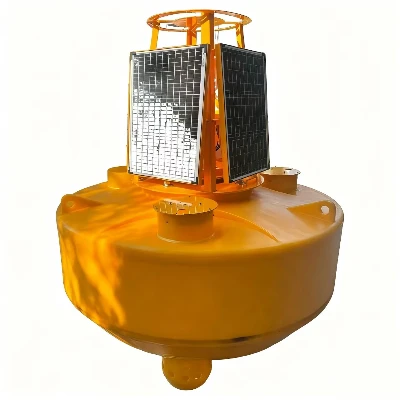
The ADCP Buoy primarily consists of a floating structure, ADCP sensors, a data acquisition and storage system, a communication module, and a power supply unit. The floating structure provides a stable surface platform for the system, and the ADCP sensor is installed at a suitable location below the floating structure to ensure relatively stable measurement conditions. The data acquisition system operates according to a preset cycle, enabling continuous accumulation of profile velocity data.
Based on our company's practical experience in buoy-type monitoring equipment, the design of the ADCP Buoy fully considers the stability requirements of the equipment during long-term observation missions. While ensuring load-bearing capacity, the floating structure also focuses on adaptability to different water conditions; the system configuration prioritizes data continuity, meeting the time-series data requirements of stratified flow observation.
The profile velocity data acquired by the ADCP Buoy can be used in various analytical scenarios. For example, by comparing velocity changes at different depths, it is possible to determine whether there is a significant stratification phenomenon in the water body; through long-term data comparison, the evolution of the stratified structure during seasonal changes can also be analyzed. This type of analysis is of reference value for understanding hydrodynamic processes.
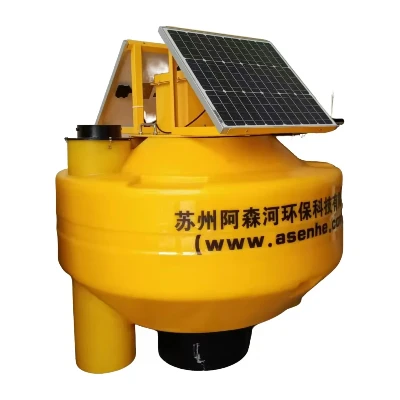
Maintaining the stable operation of the ADCP Buoy is a crucial prerequisite for ensuring data quality. Regularly checking the condition of the float, cleaning sensor surfaces, and confirming the operation of the power and communication systems helps reduce data interference caused by changes in equipment status. A standardized maintenance schedule makes the equipment more suitable for long-term stratified flow observation tasks.
The ADCP Buoy provides a reliable long-term monitoring method for stratified flow observation in water bodies. By continuously acquiring profile velocity data, it provides fundamental support for analyzing the internal flow structure of water bodies. Our company is also continuously optimizing the system integration of the ADCP Buoy to better serve stratified flow observation work, catering to different application needs.