


In the vast ocean, waves never cease. Translating these seemingly chaotic wave data into scientific data to help humans understand, predict, and utilize the ocean has always been a core issue in ocean observation. The Wave Rider Buoy is a key vehicle in this field. It's more than just a floating device; it serves as a "data bridge" connecting the ocean and humanity.
Traditional ocean observation equipment can only measure a limited number of wave parameters, such as wave height or period. The modern Wave Rider Buoy, however, offers a comprehensive upgrade. It can simultaneously measure wave height, period, direction, and spectral data, helping researchers understand wave energy propagation and dynamic mechanisms from multiple dimensions. This data is essential for weather forecasting, maritime navigation safety, port operations, and even offshore wind power site selection. Its value lies not only in "seeing wave height," but also in understanding where the waves originate, where they will travel, and what impacts they will have.
Precision is the essence of the Wave Rider Buoy. Our company's newly developed wave observation system, for example, measures wave heights from 0.01 to 25 meters with an accuracy of ±3%, far exceeding the industry average of ±5%. Furthermore, the system utilizes a 10Hz sampling frequency, enabling it to quickly acquire 9,000 sets of wave data, virtually eliminating any detail in wave crests and troughs. Furthermore, the device supports spectral separation and wave direction identification, enabling decoupled analysis of complex wave systems, which is particularly important for storm surge research and marine engineering disaster prevention. The buoy maintains stable operation even in extreme sea conditions, thanks to our innovative structural design-a composite structure of high-molecular-weight polyethylene and stainless steel that is lightweight, corrosion-resistant, and impact-resistant, effectively extending its lifespan and reliability.
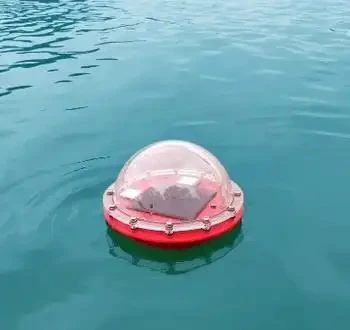
The true value of the Wave Rider Buoy lies in its ability to make ocean information visible in real time.
Utilizing Iridium or Beidou satellite communication systems, the buoy can transmit data globally in real time, unconstrained by distance or weather conditions. Researchers and managers can directly view real-time wave changes from the land-based control center, significantly improving the speed of marine warnings and emergency decision-making. Furthermore, the buoy supports remote calibration and software upgrades, significantly reducing maintenance costs at sea and providing users with greater peace of mind and efficiency.
With the need for long-term offshore deployment, energy is always a key issue. Our Wave Rider Buoy utilizes a highly efficient solar power system and intelligent energy management modules, ensuring continuous power supply even on rainy days or under prolonged high-load operation. Combined with a low-power design and automatic sleep mode, the buoy operates uninterrupted year-round, truly enabling a "place-and-forget" experience and saving users significant operational and maintenance costs.
The Wave Rider Buoy's application value extends far beyond scientific research. In port and waterway management, it provides real-time wave data for ship scheduling and risk avoidance.
In offshore wind power projects, it provides accurate wave condition support for wind farm site selection, foundation design, and operational monitoring.
In marine early warning systems, it serves as a key node in the meteorological monitoring network, providing real-time data for storm surge and typhoon path forecasts.
Even in fisheries and marine engineering construction, it plays a crucial role in ensuring safety and improving efficiency.
The Wave Rider Buoy, developed and manufactured by our company, incorporates over a decade of ocean monitoring experience and innovative technology. Adhering to the principle of "making the global ocean safer and smarter," we continuously optimize sensing algorithms, enhance weather resistance, and strengthen data transmission stability to ensure that each buoy can continuously generate sound at sea.