


In the field of industrial fluid transport, both Chemical Metering Pumps and Diaphragm Pumps are common dosing devices. While they may resemble each other in appearance and basic structure, they differ significantly in their working principles, accuracy requirements, application scenarios, and performance. Understanding these differences helps users choose the most suitable solution based on their needs.
The core of a Chemical Metering Pump lies in "precise metering." It uses a reciprocating drive mechanism to precisely displace a diaphragm, thereby strictly controlling the flow rate of the chemical and achieving quantitative delivery. A typical Diaphragm Pump, on the other hand, focuses more on "delivery capacity," using pneumatic or mechanical means to drive the diaphragm, drawing liquid in and out from one end. It offers a larger flow rate but limited control precision.
Chemical Metering Pumps are designed for high-precision dosing, with finely adjustable flow rates and an error typically less than ±3%. They are ideal for applications requiring constant proportions or continuous precise dosing, such as water quality conditioning and chemical reaction control. In contrast, Diaphragm Pumps offer coarser flow control and are more suitable for liquid transport or transfer rather than precise dosing.
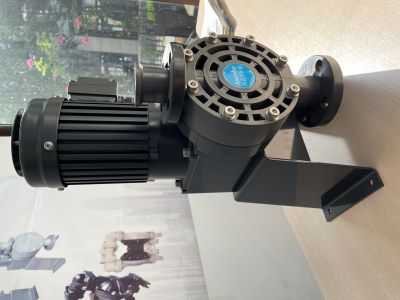
Our Chemical Metering Pump features an advanced structural design with a stable drive mechanism and corrosion-resistant materials. Flow rate regulation is achieved without adjusting motor rotation, simplifying operation and reducing maintenance. In contrast, conventional diaphragm pumps require manual adjustment of pressure and frequency based on operating conditions, making them suitable for intermittent or high-flow applications, but accuracy is more difficult to guarantee.
Both can handle media with some degree of corrosiveness, but our chemical metering pump is made with more stringent material selection-using engineering plastics, PTFE diaphragms, and high-strength alloy parts. This results in excellent acid and alkali resistance, wear resistance, and a longer lifespan, making it suitable for long-term continuous operation. While diaphragm pumps are corrosion-resistant, diaphragm wear is faster under continuous operation in high-concentration chemical environments.
Chemical Metering Pumps are commonly used in industries with strict requirements for reagent concentration and flow rate, such as water treatment, pharmaceuticals, chemicals, food, and laboratory control systems; while Diaphragm Pumps are better suited for high-flow, low-precision applications, such as wastewater discharge, oil transfer, and general chemical liquid transfer.
In summary, Chemical Metering Pumps emphasize precision and control, while Diaphragm Pumps focus more on flow rate and delivery efficiency. Our chemical metering pumps, with their advantages of high precision, corrosion resistance, long lifespan, advanced design, and ease of operation, can operate stably in complex chemical environments, providing enterprises with safer and more efficient dosing solutions.