


Marine scientific research and the offshore industry are developing fast. Wave Instrument Buoys have become a key tool for getting wave and environmental data. But different application scenarios have different demands for buoys. So choosing the right product is a common worry for research institutions, shipping companies, and energy development companies. This article will analyze the key factors in buoy selection. It is based on application requirements.
Accuracy Requirements: The First Priority for Scientific Research and Safety
In scientific research and shipping, data accuracy is directly linked to research conclusions and safety decisions. Our buoys have high-precision sensors. Even in extreme environments with 25-meter-high waves, the measurement error is less than 3%. Some applications need high-precision wave dynamics research. Some need stable performance in harsh environments. For these, choosing a buoy with high-precision sensing capabilities is very important.
Applicable Applications:
• Ocean Dynamics and Climate Change Research
• Typhoon Track and Storm Surge Monitoring
• Ship Route Planning and Port Safety Management
Real-Time Data Transmission: The Key to Remote Operations
In marine applications, data timeliness and reliability are also important. Our buoys support GPS positioning and satellite telemetry technology. They also work with Iridium and BeiDou satellite systems. This makes sure data is sent to user platforms in real time. Some applications need quick responses. These include disaster warning, shipping dispatch, and emergency rescue. For these, buoys with global, real-time transmission capabilities are a must.
Application Scenarios:
• Maritime Shipping Safety Alerts
• Emergency Rescue and Search Operations
• Real-Time Environmental Monitoring at Wind Farms
Customizable Functions – One-Stop Solution for Different Needs
Marine environmental monitoring tasks often need more than just wave data. Our buoys support multi-sensor integration. You can add modules as needed. These modules include salinity, temperature, and oil leak detection. This forms a comprehensive observation platform. Some research or operations need multi-dimensional environmental information. For these, a buoy with flexible expansion capabilities is better.
Application Scenarios:
• Long-term Monitoring of the Marine Ecosystem
• Oil Spill Detection and Pollution Tracking
• Feasibility Studies for Wind and Wave Power Projects
Energy Endurance – Ensuring Long-Term Deployment
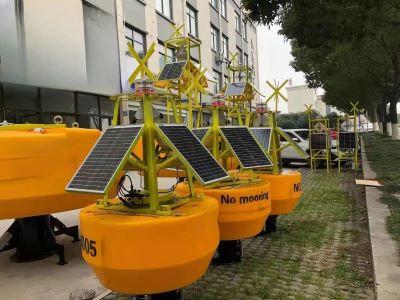
Monitoring missions in faraway or remote waters often need frequent maintenance. So the reliability of the energy system is especially important. Our buoys use a solar power and lithium battery backup solution. They can work continuously for up to two years. Some deployments are unmanned and last a long time. For these, choosing a buoy with a long-term energy supply is crucial. It helps keep the project going.
Application Scenarios:
• Deep-sea scientific research and observation
• Long-term environmental assessment and engineering monitoring
• Remote waterway safety monitoring
Comprehensive Considerations – A Scientific Selection Approach
When you select a Wave Instrument Buoy, you should consider the following key questions:
Data Accuracy: Do you need high reliability in extreme environments?
Data Transmission: Do you need real-time data acquisition and global coverage?
Functional Expansion: Do you need to monitor multiple parameters besides wave motion?
Energy Endurance: Do you face challenges from long-term remote deployment and maintenance difficulties?
If you make these considerations clear, you can choose the most appropriate buoy type in a scientific way. It will be based on your mission requirements.