


In water environment monitoring tasks, long-term stable operation is a crucial prerequisite for obtaining effective data. Based on a lightweight structure, the Lightweight Water Monitoring Buoy ensures basic operational stability while also addressing the data continuity requirements under long-term deployment conditions, making it suitable for various continuous monitoring scenarios.
During long-term operation, the buoy faces multiple factors such as water level changes, climate fluctuations, and differences in the aquatic environment. The Lightweight Water Monitoring Buoy is designed with these realities in mind, employing a reasonable float structure and system configuration to maintain relatively stable operation under various environmental conditions. Lightweight design does not mean functional simplification, but rather improving overall operational efficiency through optimized structure and system design.
Data continuity is one of the core requirements for long-term monitoring. The Lightweight Water Monitoring Buoy continuously collects relevant water environment parameters, forming complete time-series data. This type of data reflects changes in water conditions at different time scales, providing a foundation for trend analysis and anomaly identification. Compared to intermittent monitoring methods, continuous observation is more helpful in understanding the dynamic changes in the aquatic environment.
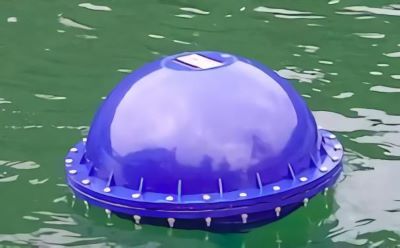
During deployment, the stability of the power supply system directly impacts data acquisition effectiveness. Lightweight Water Monitoring Buoys typically employ low-power system designs, reducing energy consumption while meeting monitoring requirements through optimized sampling intervals and data processing workflows. Some applications also incorporate solar power, enabling unattended operation and minimizing data interruptions due to insufficient energy.
The communication system is equally crucial for ensuring data continuity. Lightweight Water Monitoring Buoys can select appropriate data transmission methods based on the deployment environment, ensuring that collected information is transmitted back at set intervals. In practical operation, stable data transmission helps users promptly grasp changes in the water environment and facilitates remote monitoring of equipment operation.
Long-term operating Lightweight Water Monitoring Buoys generally maintain consistency in their acquisition and processing logic. This consistency helps ensure the comparability of data from different time periods, providing a basis for subsequent statistical analysis. By processing long-term data, the overall trend of water environment changes can be more clearly observed.
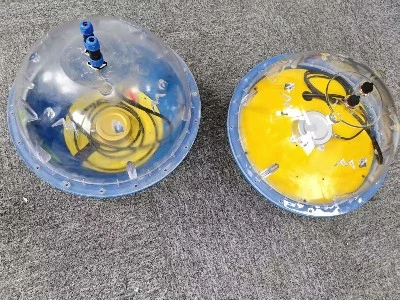
Lightweight Water Monitoring Buoys are commonly used in projects requiring long-term observation, such as reservoir management, lake ecological monitoring, and river environmental assessment. These scenarios demand high levels of data continuity and stability, and lightweight buoys effectively meet these requirements in practical operation.
Overall, the Lightweight Water Monitoring Buoy demonstrates excellent adaptability in long-term operation and continuous data acquisition. Through its lightweight design and stable system configuration, it provides a sustainable observation method for water environment monitoring.