


As worldwide demand for safe and effective medicines continues to rise, the pharmaceutical sector is increasingly turning to additive pump systems to achieve exact drug formulations. These highly accurate devices make it possible to precisely blend APIs, excipients, and solvents, which strengthens both the safety and effectiveness of medications and improves treatment reliability for patients.
Additive Pumps: Precision Drivers in Pharmaceutical Manufacturing
Additive pumps play a central role in drug production, delivering liquid components-including APIs, stabilizers, and buffers-with exceptional accuracy. Through advanced flow regulation and automated control, they enable precise micro-dosing with deviations as small as 0.1%. Today, more than 80% of global pharmaceutical producers integrate these pumps into their operations, spanning applications from vaccines to targeted therapeutics.
"Additive pumps have fundamentally changed the accuracy and consistency of modern drug formulation," commented the Chief Engineer of the International Association for Pharmaceutical Technology. "They safeguard the reliability of every batch produced."
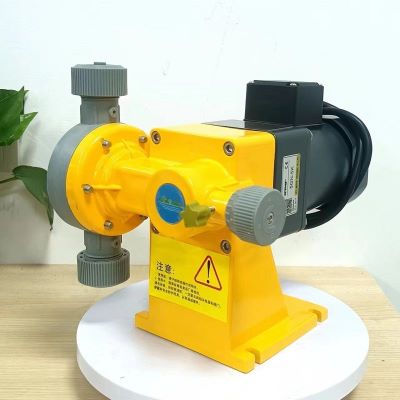
Enhancing Accuracy in Drug Development
Drug manufacturing demands rigorously balanced ingredient proportions, as even minor errors may reduce efficacy or create safety risks. WHO estimates that poor drug quality could lead to recalls costing nearly $1 billion in 2024. Additive pumps address these challenges through several innovations:
Precision micro-dosing – Pumps can deliver microliter-level doses. For instance, in one anticancer drug line, dosing errors for APIs were reduced to just 0.05%, improving therapeutic effectiveness by 10%.
Automation with real-time adjustment – AI-enabled pumps automatically correct flow variations during production, cutting human intervention in half.
Batch uniformity – These pumps maintain consistent formulations, reducing batch variation to only 0.2% while meeting stringent GMP standards.
Innovation and Global Collaboration
Next-generation additive pumps integrate durable materials, enabling operation with viscous or corrosive liquids and achieving service lives of up to 10 years, lowering maintenance costs by 30%. Intelligent flow-control algorithms and sensor systems monitor real-time parameters like pressure and flow rate, transmitting highly accurate data (up to 99%) through cloud platforms.
Such technologies are being advanced by companies in the U.S., Germany, and China, with support from the International Society for Pharmaceutical Engineering. By 2024, approximately 5,000 new precision pumps will be deployed globally, particularly to support vaccine and biologic production. Industry roadmaps project that AI-enabled pump systems will be installed in up to 90% of drug production facilities by 2028.
Conclusion
Additive pumps have become indispensable for pharmaceutical production by enabling unmatched dosing precision and automated control. They enhance efficiency, improve quality assurance, and strengthen drug safety, making them essential for public health advancement. As adoption expands and technology matures, additive pumps will continue to accelerate the growth of precision medicine and support the future of global healthcare.