


In the field of marine observation, long-term, stable, and continuous data acquisition has always been a technical challenge. Facing remote sea areas, harsh weather, and complex sea conditions, the energy consumption control of equipment determines its longevity. Our Wave Monitoring System, with its unique low-power design, breaks through the bottlenecks of short battery life and frequent maintenance of traditional monitoring equipment, enabling more sustained and intelligent observation.
The extreme energy efficiency of our Wave Monitoring System stems from the company's deep accumulation of expertise in hardware circuit optimization and signal processing algorithms.
The system is equipped with an STM32 microprocessor, which, while ensuring high computing speed, supports a dynamic power adjustment mechanism. It can automatically switch operating modes according to the task load, thereby significantly reducing power consumption.
When the system detects stable sea conditions or no data changes, it automatically enters a low-power standby mode; once wave anomalies or external trigger signals occur, the system immediately wakes up to acquire data. This "on-demand wake-up" strategy can save nearly 60% of energy consumption.
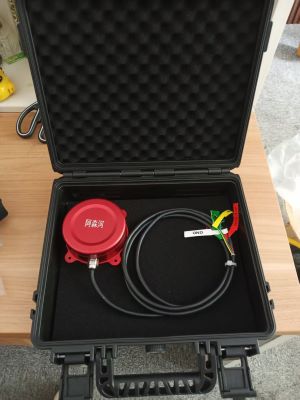
The highly integrated nine-axis MEMS-IMU (Mechanical, Electrical, and Measurement Unit) inertial sensors maintains high accuracy while employing low-power sampling technology, requiring only milliamp-level current to continuously monitor attitude changes. Our self-developed ocean dynamics algorithm optimizes the integral calculation and filtering process, avoiding accumulated errors and redundant calculations in traditional algorithms, further reducing processing power requirements.
The Wave Monitoring System offers flexible power supply options, utilizing either high-density lithium batteries or a combination with solar modules. The automatic solar power replenishment system intelligently charges during the day and automatically switches to battery power at night. Its ultra-low current design ensures the entire unit consumes less than 50 mA, allowing for continuous operation for months with limited power. This energy management strategy gives the system true self-sustaining capability, significantly extending its operational lifespan in remote sea areas.
What are the applications and functions of the Wave Monitoring System?
Long-term Ocean Monitoring: Deployable in the high seas, nearshore areas, or polar regions, continuously recording wave, tide, and energy spectrum changes.
Meteorological and Disaster Prevention Systems: Combined with satellite communication, it enables remote data uploads, providing real-time data support for storm and tsunami warnings.
Offshore Energy Projects: Suitable for scenarios requiring long-term environmental monitoring, such as offshore wind farms and oil platforms.
Scientific Research and Observation Missions: Reduces frequent recovery and maintenance, providing a stable data foundation for long-term experiments.