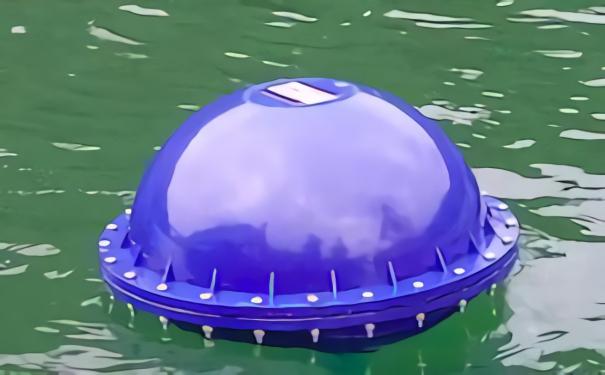
In the field of modern ocean observation, the Waverider Buoy is one of the most astonishing "smart devices." Floating on the vast ocean, seemingly an ordinary sphere, it accurately captures the subtle rise and fall of every wave, providing crucial data support for marine research, weather warnings, port management, and offshore wind power. So, what "high-tech" technology is hidden behind this?
First and foremost, the heart of the Waverider Buoy lies in its built-in inertial wave sensor. Using a nine-axis accelerometer and gyroscope, it tracks the buoy's motion in real time, sampling at a rate of up to 10Hz and collecting 9,000 data points per second. This means it can capture instantaneous changes in waves with extremely high temporal resolution, accurately recording everything from small waves of 0.01 meters to raging 25-meter surges. The Waverider Buoy not only measures wave height, period, and direction, but also performs spectral separation-distinguishing the energy distribution of different wave sources in complex wave conditions. This capability far surpasses most conventional devices on the market, which typically only measure wave direction or height.
The Waverider Buoy boasts an accuracy of ±3%, making it a true "wave microscope."
In the marine environment, durability often outweighs functionality. Our Waverider Buoy utilizes a combination of polymer composites and stainless steel, offering lightweight advantages while resisting corrosion from salt spray, UV rays, and prolonged wave impact. The buoy's hydrodynamically optimized design ensures stability in strong winds and high waves, ensuring sensor data is collected without disturbance. Furthermore, the buoy's modular structure allows users to flexibly replace sensing modules (e.g., wave, current, water quality, meteorological, etc.) based on mission requirements, significantly reducing maintenance costs and improving long-term operational efficiency.
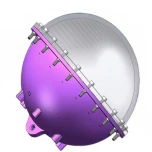
The Waverider Buoy features a built-in Beidou and Iridium dual-mode communication system, ensuring stable satellite data transmission in coastal, offshore, and polar waters.Real-time data such as wave height, wave direction, and energy spectrum are automatically transmitted back to a cloud platform, where users can view and analyze them via a computer or mobile phone, enabling true remote monitoring and intelligent management.
The system also supports data encryption and multi-protocol interfaces, making it easily compatible with scientific research databases, port monitoring systems, and marine meteorological centers.
With its high accuracy, stable structure, and low maintenance, the Waverider Buoy is widely used in various fields:
Marine research: used for wave energy research and ocean current dynamics modeling;
Port and waterway management: providing real-time sea conditions to assist in ship scheduling and route safety;
Offshore wind power projects: used to assess wave loads and energy distribution, providing data support for wind turbine foundation design;
Meteorological and disaster warning: detecting abnormal waves in advance, providing a basis for tsunami and storm surge warnings.
Every precise measurement redefines the accuracy of ocean data.
The Waverider Buoy, manufactured by Asenhe, not only strives for precision in the laboratory but also verifies its durability in real sea conditions. After thousands of hours of sea testing, it maintains exceptional measurement consistency and signal stability, making it a trusted partner for numerous research institutions and energy companies.