


An Environmental Buoy is a floating monitoring platform designed to collect environmental data from oceans, lakes, rivers, and reservoirs. Unlike simple floating markers, modern environmental buoys integrate sensors, data acquisition systems, communication modules, and power management units into a single autonomous system.
As environmental regulations and marine research projects continue to expand, Environmental Buoys have become essential tools for long-term, continuous observation.
Core Structure of an Environmental Buoy
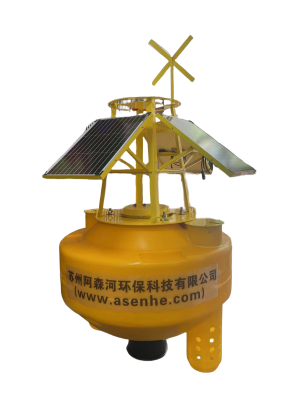
A typical Environmental Buoy consists of several main components:
Floating body structure
Sensor integration system
Power supply unit (often solar-supported)
Data logger and controller
Wireless communication module
The floating structure ensures stability on the water surface, while underwater or surface-mounted sensors measure environmental parameters. Collected data is processed onboard and transmitted to a remote monitoring center.
Unlike manual sampling, which provides only short-term data snapshots, an Environmental Buoy delivers continuous time-series information. This allows researchers and engineers to observe trends rather than isolated measurements.
What Parameters Can an Environmental Buoy Monitor?
The configuration of an Environmental Buoy depends on project goals. Common monitoring parameters include:
Water temperature
Dissolved oxygen
Conductivity and salinity
Turbidity
pH
Water level
Wave height and period
Wind speed and direction
In coastal and offshore projects, additional wave spectrum or directional wave data may also be required. In inland water applications, water quality parameters often receive more focus.
Selecting appropriate sensors is not about installing as many as possible, but about aligning with the monitoring objective.
Why Long-Term Deployment Matters
One of the main advantages of an Environmental Buoy is its ability to operate continuously in remote locations. Many monitoring areas are difficult to access regularly, especially offshore zones or deep-water reservoirs.
Low power consumption design and stable structural configuration allow the buoy to function with minimal maintenance. Data transmission intervals can also be adjusted depending on project requirements, balancing data resolution and energy usage.
Environmental Buoy as Part of a Monitoring System
An Environmental Buoy rarely works alone. In most projects, it acts as a node within a larger monitoring network. Data may be integrated into cloud platforms, environmental databases, or early warning systems.
In our experience working with customized buoy solutions, system compatibility is often as important as hardware performance. Many clients focus on whether the buoy can integrate smoothly into their existing data infrastructure.
Customization Based on Deployment Conditions
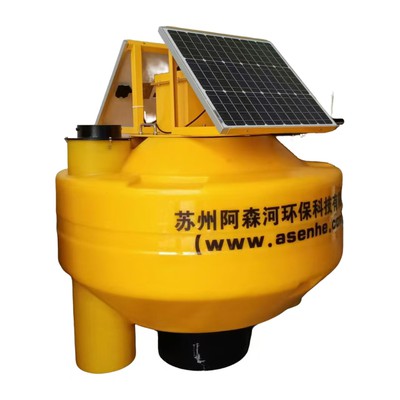
Environmental conditions vary widely between calm lakes and open sea environments. Structural strength, anti-corrosion materials, anchoring methods, and sensor layout must be adapted accordingly.
Instead of applying a single standardized configuration, many Environmental Buoy projects benefit from modular design. By adjusting float size, sensor type, and communication setup, the buoy can better match the intended environment and monitoring purpose.
Conclusion
An Environmental Buoy is more than a floating sensor-it is a long-term environmental observation platform. By delivering stable and continuous data, it supports environmental management, marine research, and infrastructure planning.
As monitoring needs continue to evolve, Environmental Buoys will remain central to water and marine data collection strategies.