


A Navigation Buoy's ability to maintain stable operation during a storm is a key measure of its technical reliability. Extreme conditions such as wind and wave impacts and changing weather conditions pose severe challenges to the buoy's structure, anchoring system, power supply, and sensor systems.
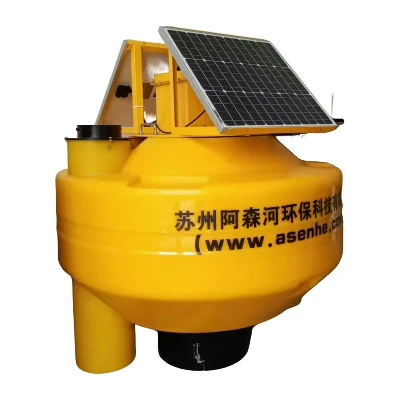
During a storm, waves surge, exposing the buoy to extreme impact and the risk of capsizing. However, high-quality Navigation Buoys typically utilize a double-layer high-density polyethylene (HDPE) or engineered composite outer shell, coupled with an internal stainless steel or high-strength frame, achieving a balance between lightweight and strength.
Even with a robust buoy structure and anchoring system, physical strength alone is not enough to maintain stable performance during heavy rain and waves. Modern intelligent Navigation Buoys must possess real-time attitude monitoring and active compensation capabilities. Our company's high-end buoy design integrates the following key technologies:
Nine-axis Inertial Measurement Unit (IMU): Detects pitch, roll, and roll changes in real time.
Attitude Calculation Algorithm + Correction Mechanism: When the buoy tilts or wobbles, the system automatically detects and filters out disturbance signals caused by waves, outputting only true channel environment data.
Dynamic Power Management: Under high-load conditions during storms, communication, sensor, and other modules switch to low-power mode to ensure stable operation of the main control system.
Anomaly Detection and Safety Mode: In the event of extreme sensor anomalies (such as tilt, disconnection, or insufficient power), the buoy enters a "self-stabilization protection" mode, reducing non-essential system load and maintaining core navigation and monitoring functions.
This coordinated hardware and software control strategy enables our buoy to maintain its self-assessment and automatic adjustment capabilities even when torn by wind and waves, ensuring stable operation in extreme sea conditions.
During storms, communication signals are often subject to interference or obstruction. To ensure the Navigation Buoy can transmit critical navigation data to shore even in adverse weather conditions, we have designed the following communication system:
Redundant satellite links: Supports multiple link backups, including Iridium, Beidou, and Inmarsat.
Resume transmission mechanism: In the event of a brief signal interruption, the system caches critical data and automatically retransmits it upon signal restoration.
Data compression and reduction algorithms: Prioritize transmission of core navigation data in high-interference scenarios, reducing the probability of communication failure.
Antenna protection design: A waterproof and reinforced antenna layout ensures communication stability in strong winds and waves.
In actual projects, the Navigation Buoy's wind and wave resistance is particularly tested in the following scenarios:
Port entry and exit channels: When storms strike, water currents fluctuate dramatically. Ships entering and exiting require real-time current and wave data. Any buoy instability would directly impact navigation safety and scheduling.
Offshore wind farm boundary marking: Buoys must maintain accurate positioning in strong waves to ensure clear and identifiable routes and safety zones within the wind farm area. Fast-track or channel marking: In areas where strong winds and tides converge, Navigation Buoys must maintain normal illumination, signal output, and positioning capabilities in heavy waves to fulfill their navigational support role.
In these scenarios, our intelligent structure, anchoring design, control strategy, and communication support are fully utilized to ensure that Navigation Buoys remain stable, visible, and capable of transmitting data even in extreme weather.