


Double diaphragm pumps are devices that achieve liquid transfer through the reciprocating motion of two diaphragms. They are widely used in chemical, water treatment, electroplating, printing and dyeing, and other industries. Due to their structural characteristics, these pumps perform stably when handling corrosive liquids, media containing particles, and high-viscosity fluids, making them a common transfer device in many factories.
Double diaphragm pumps are driven by compressed air. The two diaphragms move alternately under air pressure, creating suction and discharge processes in the pump chamber. The liquid is completely isolated from the drive chamber, which reduces the risk of leakage and minimizes component damage caused by media corrosion. This structure is particularly important in applications involving acids, alkalis, cleaning agents, and electroplating additives.
During long-term use, the stability of the diaphragm material directly affects the equipment's lifespan. In the design of our double diaphragm pumps, we use a variety of corrosion-resistant materials, such as PTFE, PVDF, and stainless steel, to meet the transfer needs of different chemical media. At the same time, by optimizing the fluid channel structure, we reduce the retention and erosion of the medium within the pump body, resulting in smoother operation.
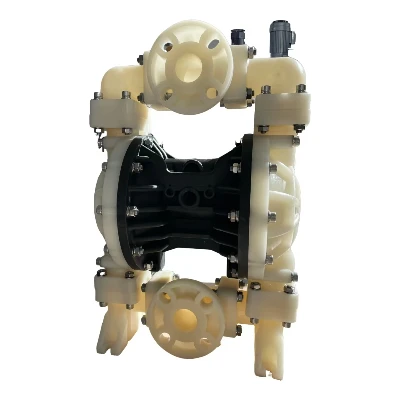
In water treatment systems, double diaphragm pumps are often used to transfer coagulants, flocculants, and acid-base regulating agents. Because the dosing process requires a certain degree of stability, the uniform output capacity of these pumps ensures a continuous and controllable dosing process. For many wastewater treatment plants, the low maintenance frequency of these pumps also helps reduce operating and management costs.
In the electroplating and surface treatment industries, double diaphragm pumps are mainly used to transfer electroplating solutions, cleaning solutions, and chemical additives. These media are somewhat corrosive, and long-term operation requires high-quality materials. By rationally selecting the diaphragm and pump body materials, the pump can maintain stable operation in complex environments.
From a practical application perspective, double diaphragm pumps do not win by a single performance advantage, but rather by their safety, adaptability, and stable operation capabilities, forming a relatively mature application base in multiple industries. As process requirements increase, their role in refined fluid transfer will become even more significant.