


As a key piece of equipment in modern water ecological governance systems, environmental buoys are driving the transformation of marine, lake, and estuarine environmental monitoring methods from traditional manual sampling to automation, real-time monitoring, and intelligent systems. With increasing global ecological pressure, governments, research institutions, and enterprises worldwide are increasing investment in water body monitoring equipment. Among these, buoys, with their stable, efficient, and scalable characteristics, have become the most reliable data source for ecological governance.
The greatest advantage of environmental buoys lies in "continuous monitoring" and "real-time transmission." Traditional monitoring relies on manual sampling at sea, which is infrequent and easily affected by weather. The advent of buoys has transformed ecological monitoring from intermittent to continuous, 24/7 operation, capable of stable operation even in wind, waves, heavy rain, and at night. Important parameters such as dissolved oxygen, chlorophyll, turbidity, temperature, salinity, water level, tidal currents, and meteorological factors can be recorded simultaneously, significantly improving the completeness and accuracy of water ecological data.
In water ecological governance, environmental buoys provide crucial early warning functions. When the buoy sensors detect anomalies, such as a rapid increase in nutrient concentration, abnormally accelerated cyanobacteria growth, or a sharp drop in dissolved oxygen levels, the system can automatically generate alarms and notify management personnel. This ability to intervene early helps effectively prevent events such as red tides, cyanobacteria blooms, and large-scale fish deaths, thereby reducing the chain reaction caused by ecological disasters.
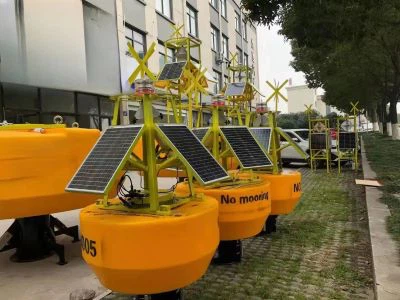
For marine ranches and aquaculture areas, the value of Environmental Buoys is even more prominent. Aquaculture is highly dependent on environmental conditions; once water quality deteriorates, it can lead to a significant drop in yield and even economic losses. By deploying environmental buoys, aquaculture areas can monitor indicators such as water temperature, pH, and oxygen content in real time, enabling more scientific management of feeding, oxygenation, and inspection. For example, when the buoy detects oxygen deficiency in the water, the system can immediately alert aquaculture personnel to take measures to prevent fish from suffocating and dying.
Environmental Buoys are also playing an increasingly important role in urban water management. River management, lake restoration, and wetland ecological maintenance all require scientific and stable data as support. Environmental buoys can capture data on urban sewage discharge, pollutant diffusion trends, and water quality changes after ecological restoration, helping managers formulate precise governance strategies. Through the accumulation of long-term monitoring data, the changing trends of urban aquatic ecosystems can be visually presented, providing a reliable basis for policy formulation and governance decisions.
Environmental buoys are also irreplaceable in scientific research. Researchers use the continuous environmental data obtained from buoys to build mathematical models, analyze ocean dynamic processes, study energy exchange in water bodies, and even study the impact of global warming on ocean systems. Buoy data not only has scientific value but can also contribute to international climate observation systems through shared platforms.

In engineering applications, environmental buoys are widely deployed in ports, waterways, wind farms, and marine engineering construction areas. Real-time sea state data provides accurate references for ship scheduling, construction arrangements, and waterway maintenance. Similarly, in the preliminary assessment of offshore wind power projects, buoys can provide key parameters such as wind speed, waves, and tidal currents, providing necessary data support for wind turbine foundation design and site selection.
The Environmental Buoy is not just a piece of equipment, but a complete ecological information collection system. It provides a window for understanding the aquatic environment, a foundation for ecological governance, and solid data support for marine protection. As the technology continues to evolve, it will play an increasingly crucial role in future ecological civilization construction.